Community story
In 1955 St. Louis Catholics asked a Yorkshire abbey for monks to run a school for their sons. Three came, with no students, no classrooms and no playing fields. Seven decades later the monastery and school they started still stand on Mason Road.
Creve Coeur, Missouri — St. Louis County
When three Benedictine monks from Yorkshire reached St. Louis in 1955, the men who had invited them had a lavish welcome dinner waiting. Father Columba Cary-Elwes, the leader of the three, would not start there. “Vespers first,” he told them. The monks prayed the Church’s evening office, and only then did anyone sit down to eat.
They had come to start a school. They had no students, no classrooms, no textbooks, no math or science teachers and no playing fields. They had a check for $10,000, handed to Father Luke Rigby by the lay group’s treasurer. And they had an invitation from the Archbishop of St. Louis to their abbot in England, accepted, as far as anyone can tell, without a legal contract ever being signed.
The idea began after World War II with a group of St. Louis Catholic laymen. They wanted a school for their sons demanding enough to send its graduates to the best universities in the country, including the secular ones, and grounded enough in the faith that the boys would hold onto it once they got there. Setting out to send Catholic boys to non-Catholic colleges was an unusual goal for the time. Archbishop Joseph Ritter, who would be named a cardinal in 1961, gave the plan his support.
The men wrote out what they wanted, found land and money, and incorporated as the Catholic Preparatory School for Boys. What they could not find was teachers. No community they could turn to had monks to spare. They knew Father Aelred Graham, an Ampleforth monk then serving as acting superior of Portsmouth Priory in Rhode Island. Portsmouth could not spare anyone either, but Father Aelred thought an English abbey might, and he went to England to make the case for St. Louis himself.
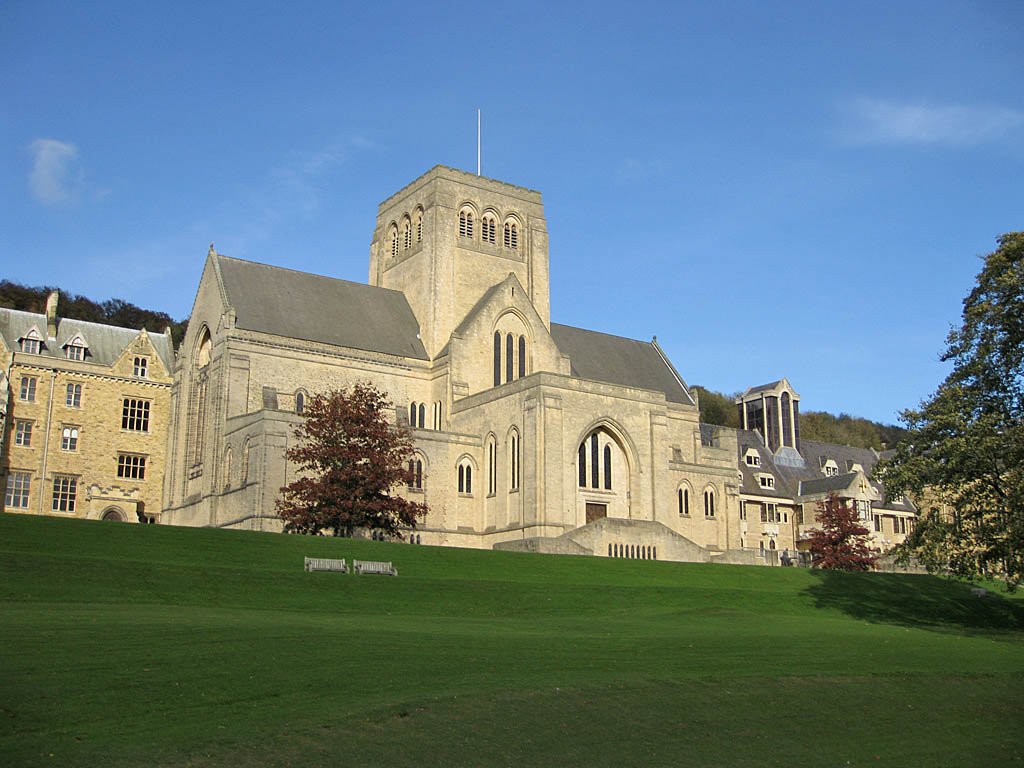
Ampleforth Abbey sits in the hills of North Yorkshire. Its monks descend from English Benedictines who were driven out under Henry VIII, kept their community alive in exile on the Continent, and came home in the early 1800s to found Ampleforth, where they ran a school beside the monastery. By the 1950s it had well over a hundred monks and was looking to start a new house.
Abbot Herbert Byrne accepted the St. Louis invitation on one condition. Ampleforth would not simply lend teachers to a school. It would found a monastery, and the monastery would be the heart of the whole project.
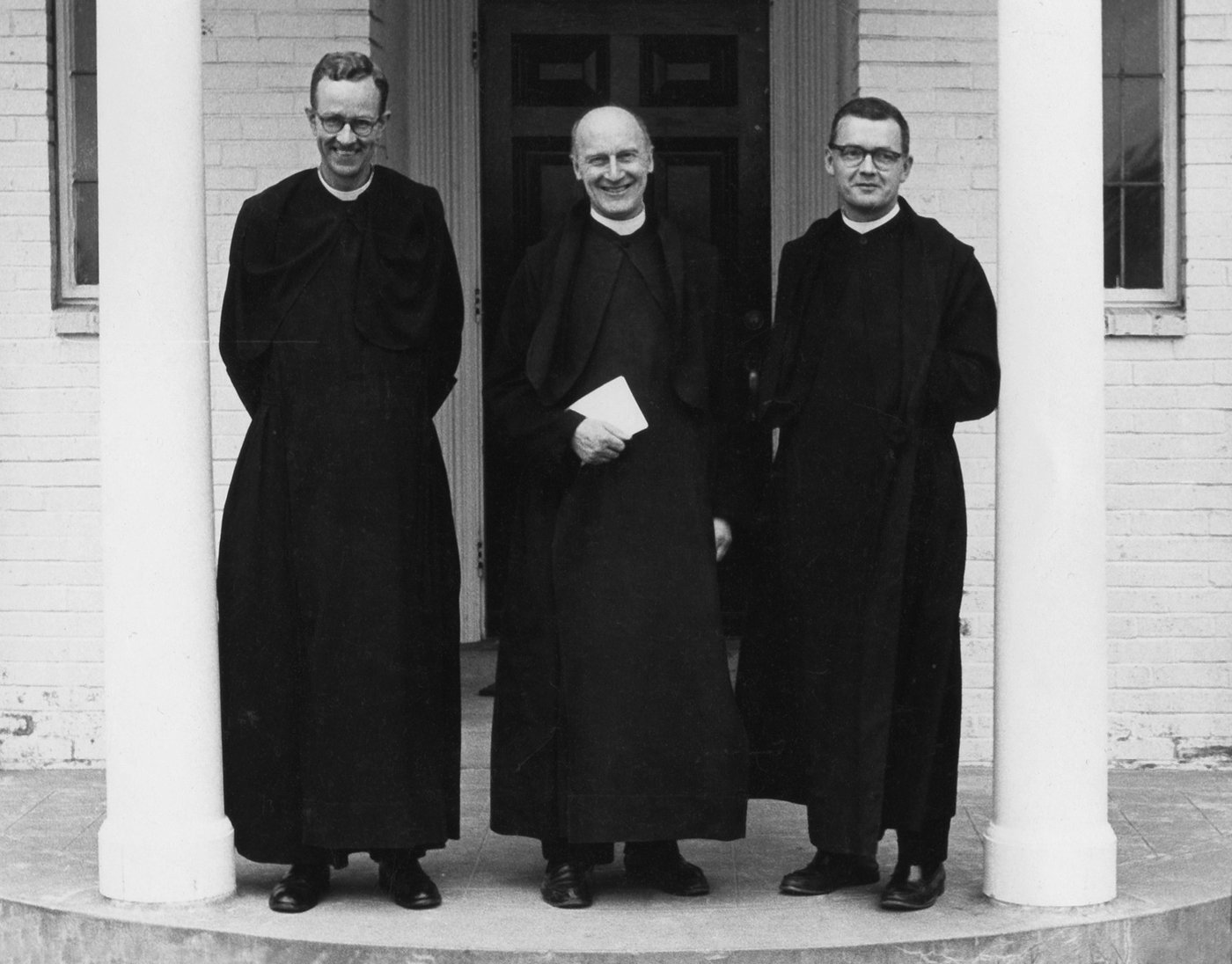
The three men he sent were not spare. Father Columba had been Ampleforth’s prior, second only to the abbot, since 1951. Father Timothy Horner had served in the artillery in World War II, studied at Oxford, and taught classics and coached cricket at Ampleforth. Father Luke, the youngest, had gone to school at Ampleforth and joined the monastery straight from there. They sailed to New York, stopped in Washington, and came on to St. Louis.
Saint Louis Priory School opened in September 1956 with a single ninth-grade class of 30 boys. Applicants sat a written exam in English and math and were interviewed by the monks. A grade was added every year until the school ran from seventh grade through twelfth. In the fall of 2025 it added a sixth grade, which Priory calls Form A.
Father Timothy was headmaster for the first eighteen years, from 1956 to 1974. He also started the school’s first sports team: a rugby side, the Rebel Ruggers.
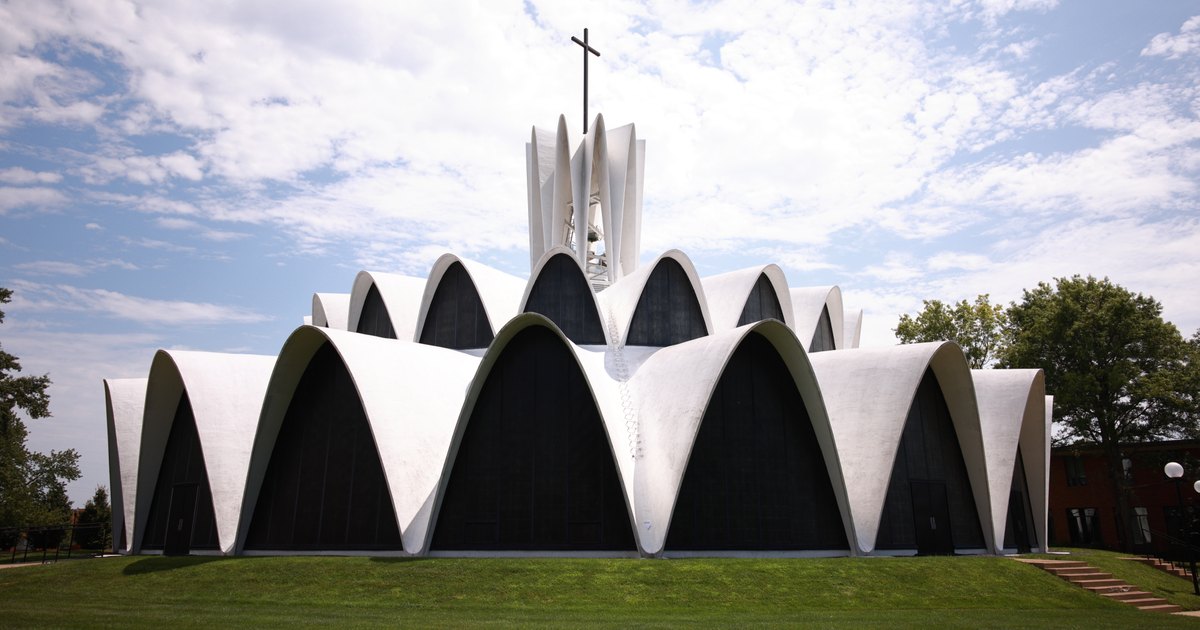
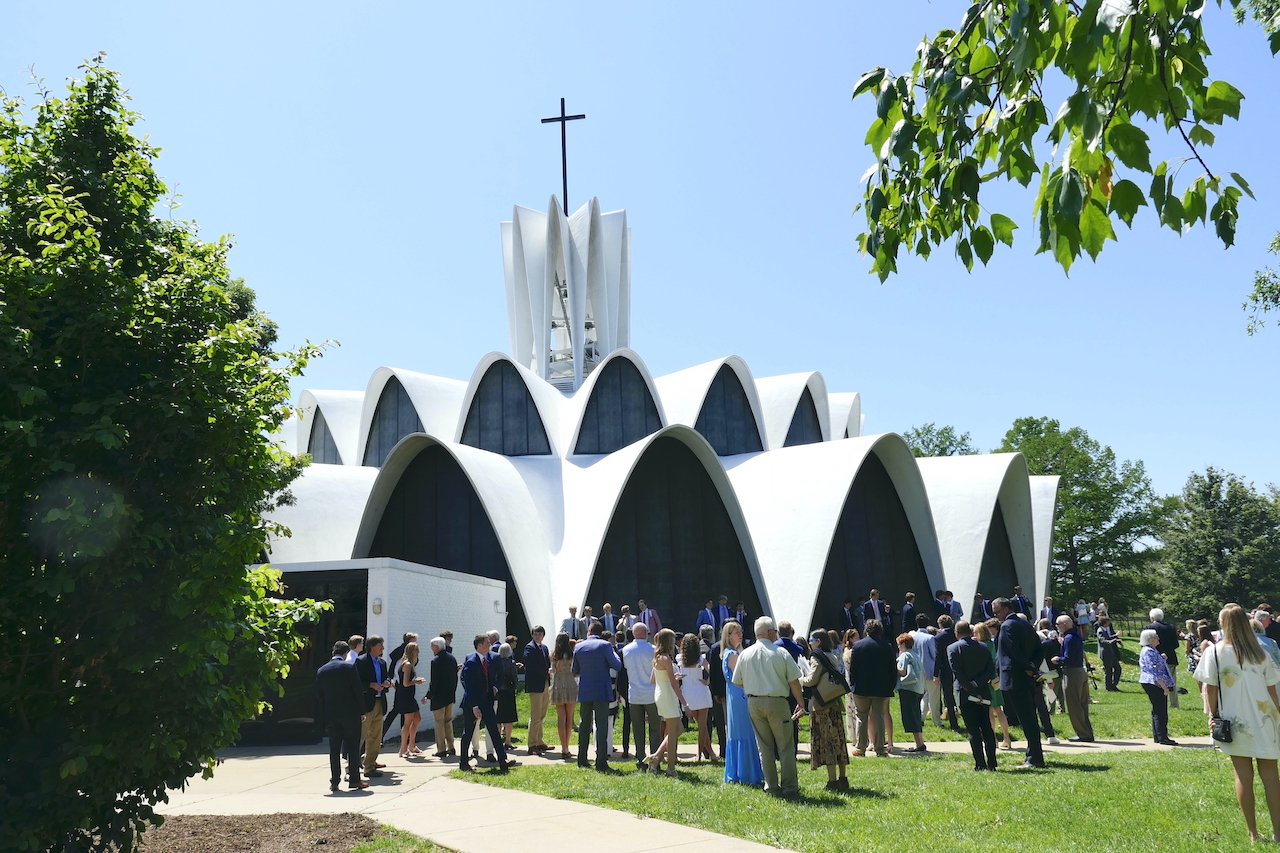
In the late 1950s the monks sat down with a young St. Louis architect, Gyo Obata of Hellmuth, Obata & Kassabaum, to plan a church. Father Timothy and Obata favored a round building made of thin concrete arches, a design so unusual that the prior nearly turned it down. Obata asked Pier Luigi Nervi, the Italian engineer famous for concrete shell roofs, to look it over. Nervi gave it his blessing, and the project went ahead.
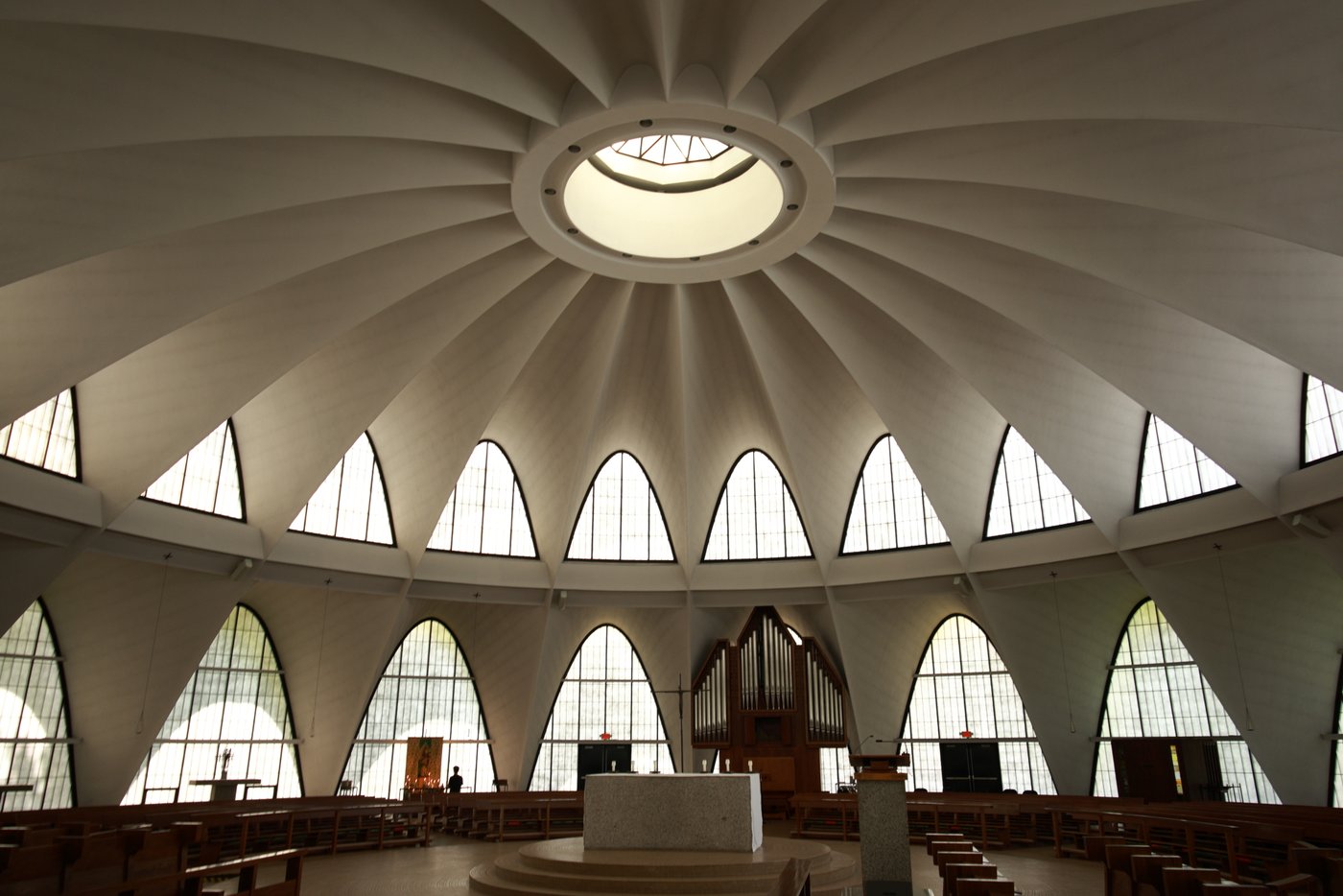
McCarthy Brothers of St. Louis won the job with a low bid of $538,000. Instead of pouring concrete into wooden molds, the crew sprayed it from a high-pressure gun onto reusable forms, and a crane leapfrogged those forms around the circle a few arches at a time. The church was finished in 1962: three rings of white parabolic arches, with the pews and the monks’ choir gathered around an altar at the center. It appeared in Life magazine. For Obata, it was the work that first brought his firm, HOK, national attention.
The priory became independent of Ampleforth in 1973 and was raised to an abbey in 1989. The school that opened with 30 ninth graders now teaches about 350 boys, from Form A sixth graders to Form VI seniors, on a 150-acre campus on Mason Road. The graduating classes of 2018 through 2020 alone were admitted to more than 200 colleges and universities, and sent boys to Harvard, Princeton, Dartmouth and the U.S. Naval Academy. On average, nearly a quarter of Priory seniors are recognized by the National Merit program.
Some of those boys became well known. Kevin Kline, class of 1965, won an Academy Award for A Fish Called Wanda. John Keene became a MacArthur Fellow and won the National Book Award for Poetry. D. John Sauer won a Rhodes Scholarship to Oxford, where Father Timothy had studied, and in 2025 became Solicitor General of the United States.
Others came back. Abbot Gregory Mohrman, class of 1976, was baptized with Father Columba looking on and was enrolled in the school that same month. In June the monks re-elected him to another eight-year term. The monastery’s prior, Father Cuthbert Elliott, class of 2002, was raised Protestant and decided to become Catholic after following the path of St. Cuthbert on a Priory trip to England. He went on to serve as headmaster from 2018 to 2025.
Sixteen monks are profiled on the Abbey’s website today. Among them are teachers with doctorates, poets, a calligrapher, a former professional juggler, and a former rugby player who makes armor. At the start of 2026, three young men were living with the community as postulants. The newest member is a novice, Brother Bonaventure. And the monks still try to live by the rule Father Columba set on their first night in St. Louis: Vespers first.
The school began with a $10,000 check. Every winter it raises money at Xanadu, Priory’s auction, and the 58th Xanadu is set for Saturday, February 6, 2027, at the Missouri Athletic Club downtown. The Saint Louis Priory School raffle will be drawn at Xanadu, and the grand prize is $10,000.
Tickets are $25 and went on sale November 2, with free tickets added on bundles of four or more. Sellers are organized by form, from Form A to Form VI, along with alumni, staff and the monks of Saint Louis Abbey. Last year’s raffle sold $24,050 in tickets. Every ticket supports the school that three monks started with no students, no classrooms and no playing fields.
Were you, your father or your grandfather in one of those early Priory classes? Do you remember the arches going up along Mason Road, or a first Mass in the round church? Those memories are part of this history too, and we would like to hear them.
Top photo: The Abbey church on Mason Road, completed in 1962. Photo: ArentYouJustAdorable, via Wikimedia Commons (CC BY-SA 4.0). Sources: Saint Louis Abbey; the English Benedictine Congregation; Saint Louis Priory School; St. Louis Post-Dispatch; St. Louis Review; Architectural Record; Restless Hungarian.
Keep reading
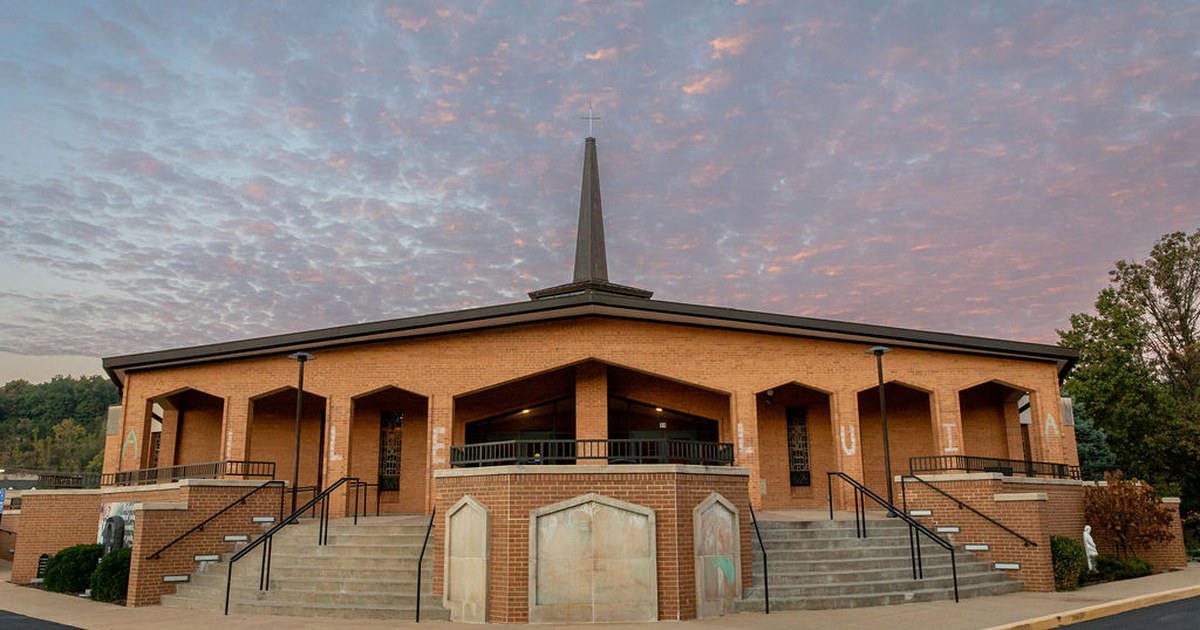
For 147 years, Fenton has shown up for St. Paul Catholic Church. Now the parish's Queen of Hearts jackpot is past $84,000, and only three cards remain.
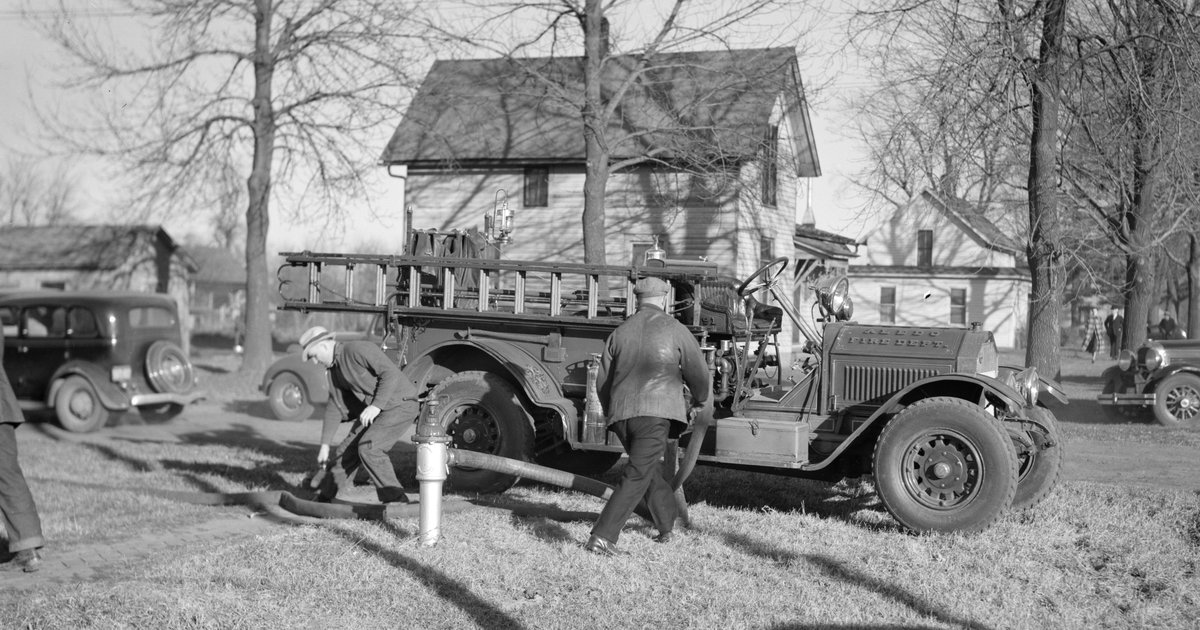
A 1917 Packard bought out of a junkyard for $325, a firehouse paid for in wine, an ambulance district that ran on collection jars: how neighbors around St. Louis built their own emergency services before 911
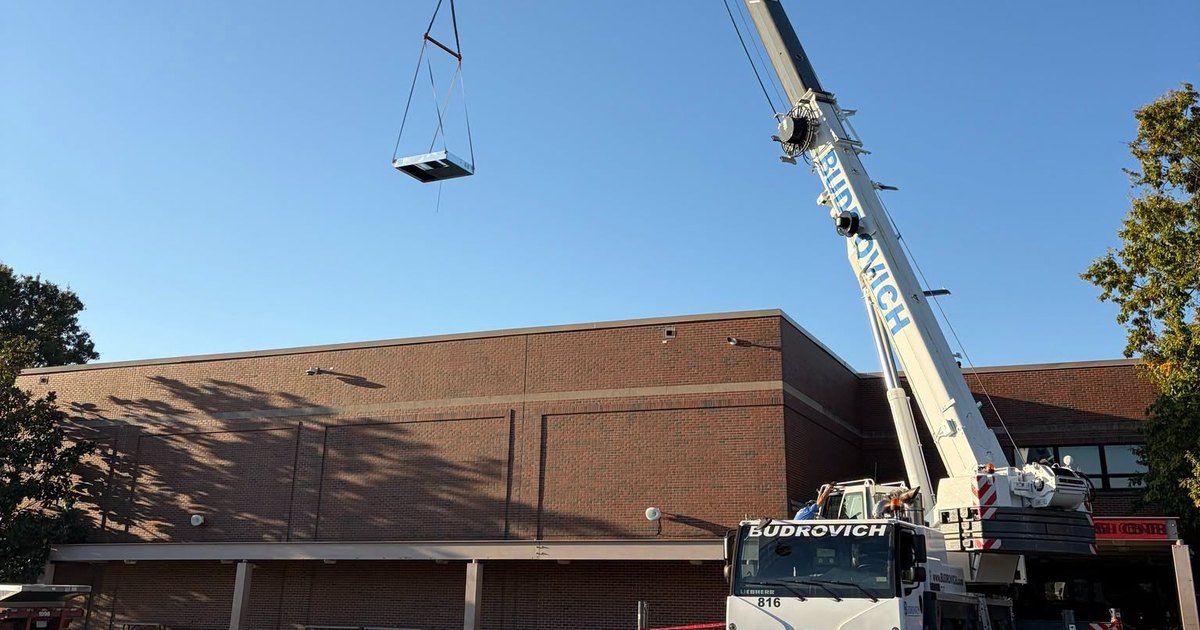
Four Queens, a $611,162 jackpot and more than $1.15 million in tickets later, the work Assumption's raffle has been raising money for is going in.