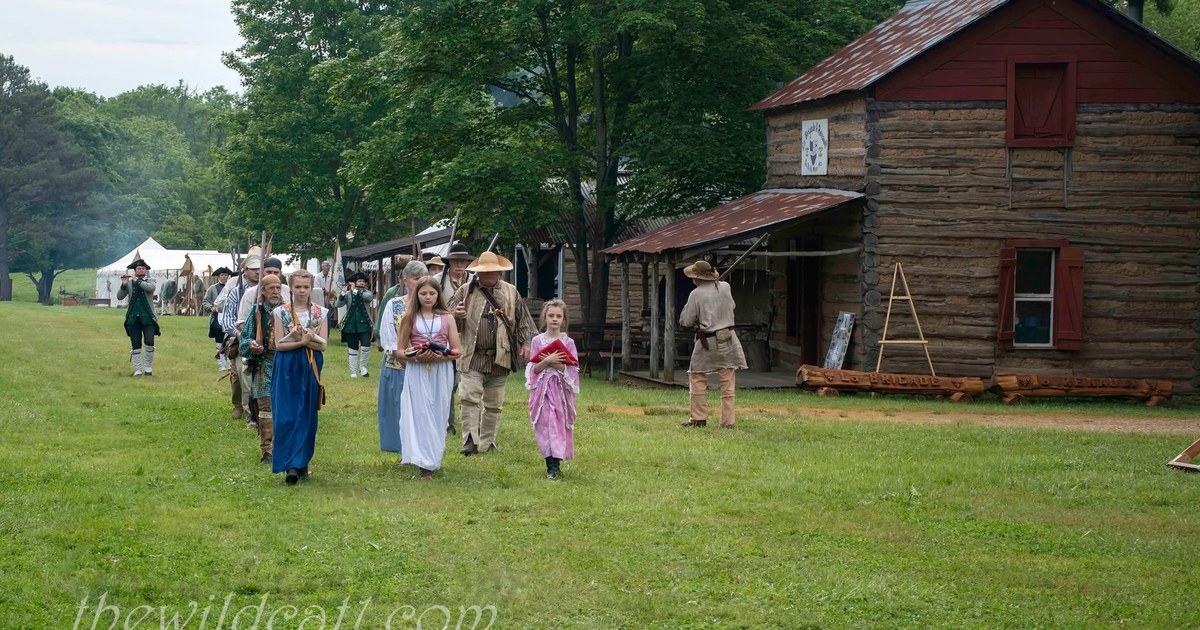
Old Mines, Missouri — Washington County
St. Louis likes to tell its story in layers. The French laid the first one in 1764, and the Germans, the Irish and the Italians built on top of it, until the French layer survived mostly as street names: Chouteau, Gravois, Soulard, Laclede’s Landing.
Drive an hour south on Highway 21 and that first layer is still on the surface.
Forty Years Before Laclède
Old Mines, in Washington County, calls itself the oldest settlement in Missouri, and it has the paperwork. On June 26, 1723, the French crown granted Philippe François Renault the right to mine lead there. He brought about 200 workers from France, along with enslaved Africans bought in Saint-Domingue, and set them digging. That is a dozen years before Ste. Genevieve’s traditional founding date and forty-one before Pierre Laclède picked out the riverbank that became St. Louis.
The flag changed three times, France to Spain to France and then the Louisiana Purchase in 1803, but the families stayed. In 1836 the United States confirmed the land claims of 31 of them, the Old Mines Concession. They had already built a brick church, St. Joachim, in 1828; it still serves about 350 families. After the Civil War they found the ground held something besides lead: barite, which everyone called tiff. Starting in 1874, families dug it by hand from pits ten to thirty feet deep, and Washington County became known as the barite capital of the world. The last Missouri tiff mine closed in 1998.
Still Here
Through all of it they kept talking the way Renault’s miners talked. Missouri French, “Paw Paw French,” was once spoken from Vincennes, Indiana, across Illinois and into the Ozarks. A century ago thousands of people around Old Mines still spoke it. Schoolteachers in the 1920s and 30s punished children for it, and today only a few dozen fluent speakers remain, most of them elderly. It is one of the most endangered kinds of French in the world, and this corner of Washington County is its last stronghold.
They kept the customs too. On New Year’s Eve, La Guillonée sends men in disguise from house to house by lantern light, singing for pledges of food and money toward a king’s ball held before Mardi Gras. It is a door-to-door fundraiser, and it was running before Missouri was a state.
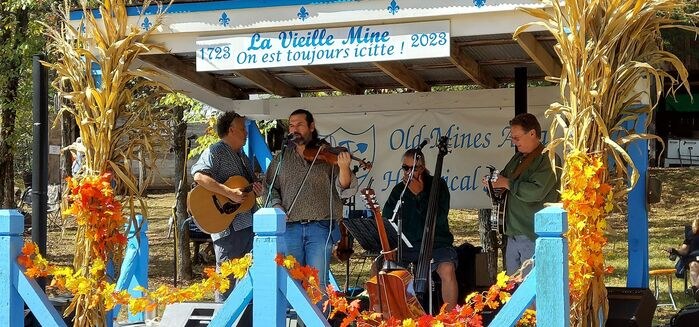
And they kept the music. As a college student in Cape Girardeau, an Illinois kid named Dennis Stroughmatt started showing up at Old Mines house parties, the bouillons, and spent three years learning the language and the fiddle tunes from Roy and Pete Boyer and Charlie Pashia. He has since played that music across the country and overseas with his band, L’Esprit Creole. On Sunday he plays it at home.
The Village
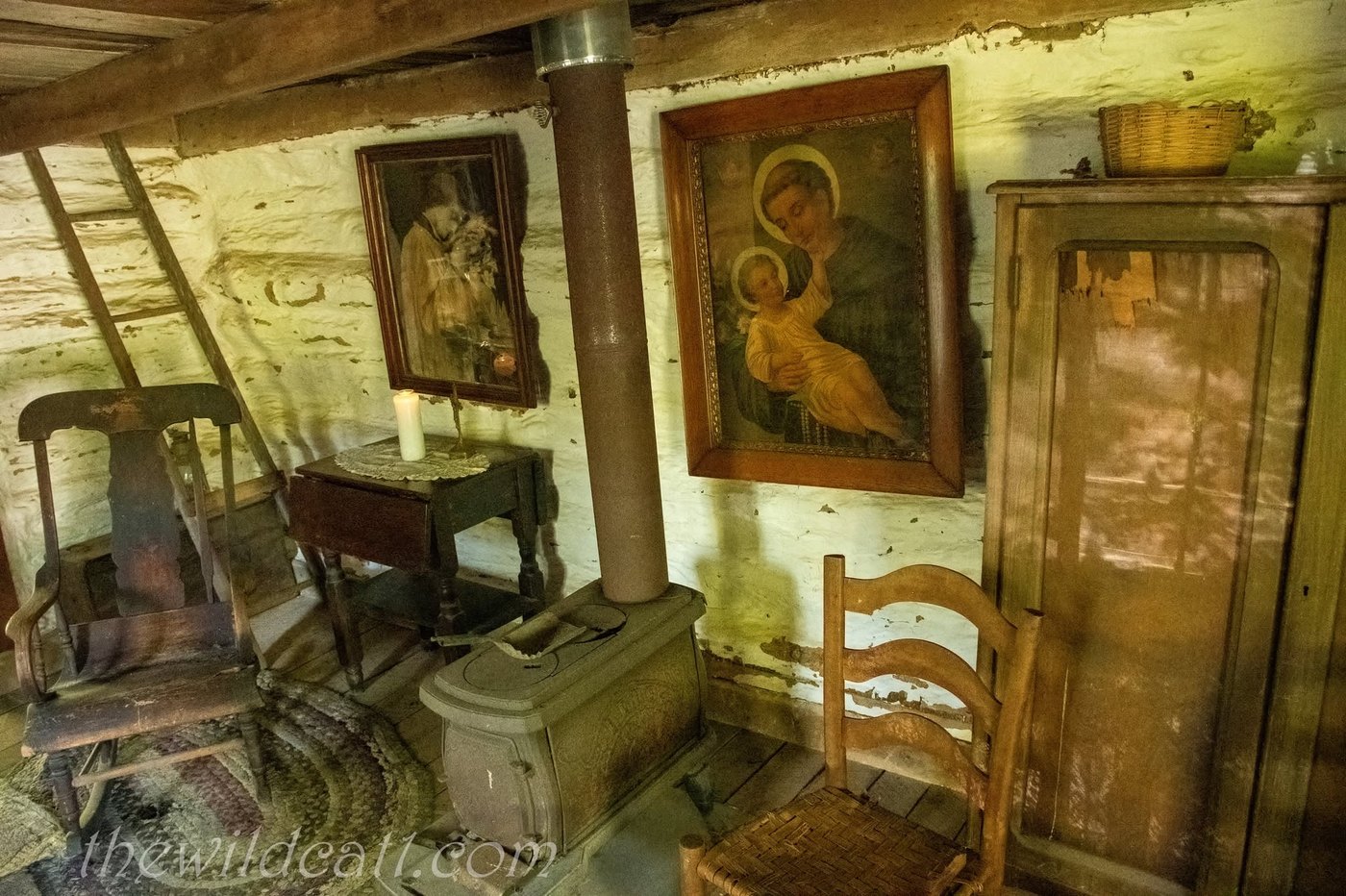
The Old Mines Area Historical Society formed in 1977 to hang on to all of this. It is run by volunteers, it publishes a journal called The Diggin’s, and its biggest project is Le Village de Vieille Mine: four log cabins from the surrounding countryside, taken down and rebuilt on society ground, using original logs more than 175 years old wherever they could be saved. The Mundy-Doyen cabin came from Richwoods, the Portell cabin from Dog Patch and the Duclous-Pashia cabin from Rabbitville, all built in the 1840s; the Boyer-Robart cabin came from Fountain Farm. The village is normally closed except for tours.
Like every small organization in this part of the state, the society pays for it the way parishes pay for everything: with a festival. The season in Washington County runs from the St. James parish picnic in June through the St. Joachim Fall Festival in September, and La Fête de l’Automne closes it on the first Sunday of October. This year, for the first time, the fête moves into the village itself.
Sunday, October 4
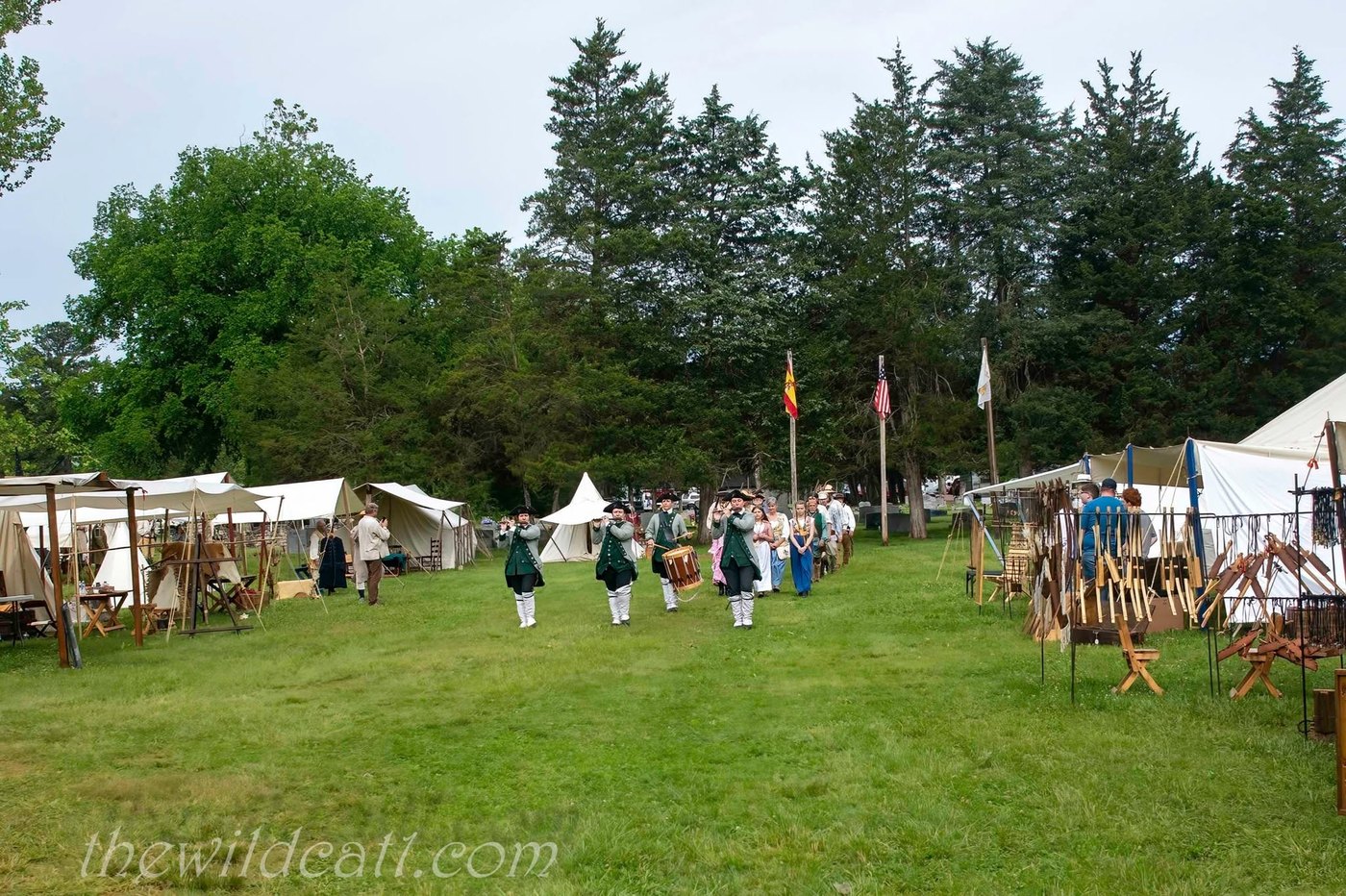
This year’s fête marks 303 years of the French in Washington County and honors the Pashia family, the same name that is on one of the cabins and on the fiddler who taught Stroughmatt. The flag goes up at 11 a.m. and events run until 4. There will be croquignoles fried fresh on site, French sausage, ham and beans, roasted corn on the cob, apple butter making and a bakery, plus a country store, 1800s crafts, storytelling, a log home museum and genealogy help for anyone tracing an Old Mines family. Dennis Stroughmatt et L’Esprit Creole play all day.
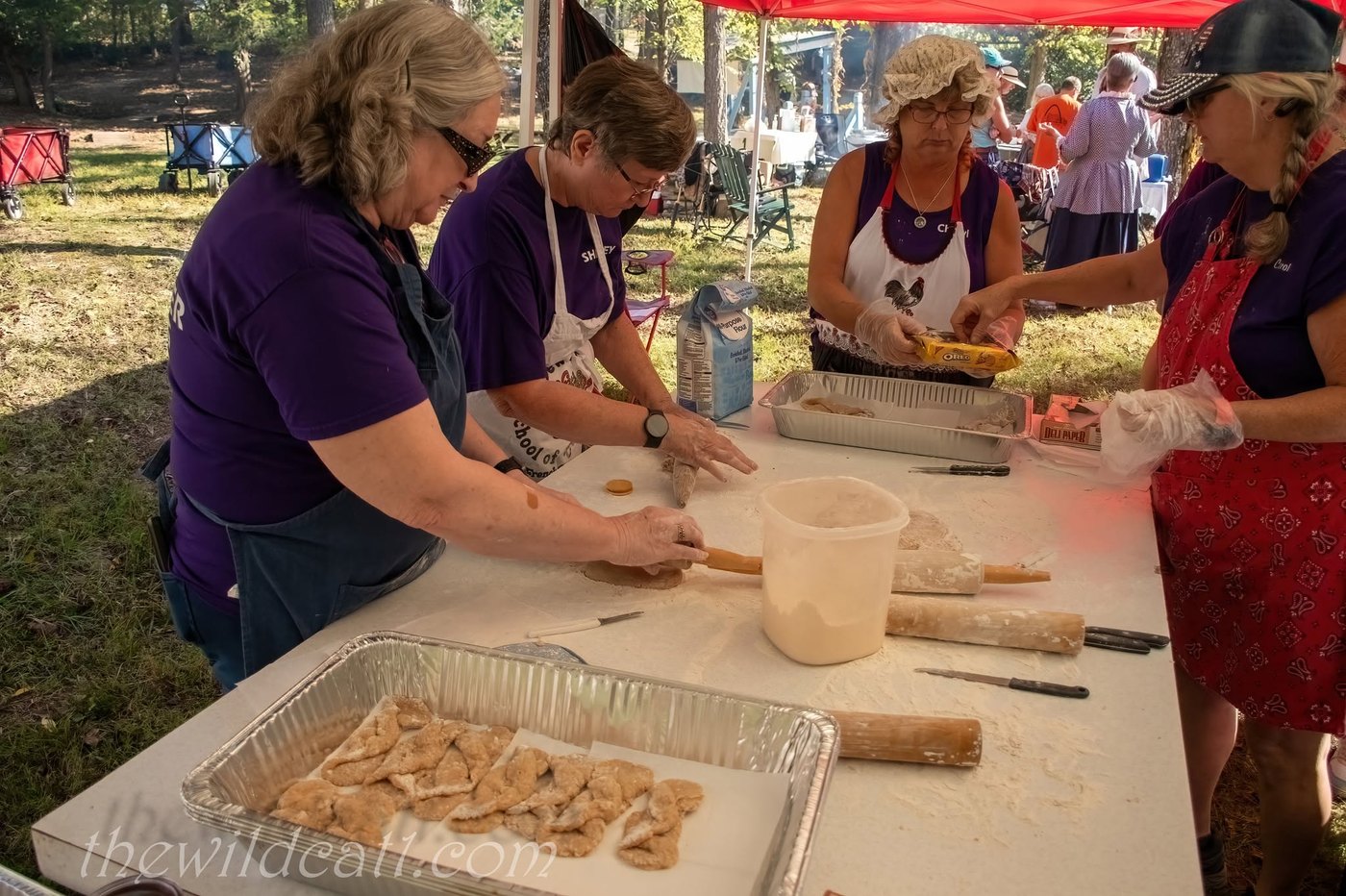
Admission and parking are free. Bring a lawn chair and wear walking shoes; the grounds are rocky and uneven, and a shuttle is available for anyone who needs it.
The village is at 10275 Voisinage Road, Cadet, MO 63630. From St. Louis, take the Tesson Ferry exit off I-270 and follow Highway 21 south about 40 miles to Old Mines, turn left on Highway 47, left on Mystic Road, then left into the village. From Potosi, take Highway 21 north to Old Mines, turn right on 47, left on Mystic Road, then left into the village. Questions: 573-854-0508, oldmines@yahoo.com, or omahs.weebly.com.
If your last name is Boyer, Portell or Pashia, go find your relatives. If it isn’t, go anyway.